That Musty Smell After a Leak in Your Home? Here Is What It Usually Means
A musty smell after leak events in your home is rarely just a smell. That damp, earthy odor, the kind people describe as wet cardboard or a basement that has been closed up too long, is one of the earliest and most reliable warning signs that mold has started growing somewhere you cannot see. For homeowners across Modesto and the Central Valley, recognising what that smell means, and acting on it quickly, is the difference between a small cleanup and a much larger problem inside the walls.
RedTag Property Mitigation helps homeowners and property owners deal with water and mold situations throughout the region. This guide explains what causes a musty smell after leak trouble in a home, why it so often points to hidden mold, how fast mold can take hold, and what you should do when you notice it. The goal is to help you understand the problem clearly so you can protect your home and your health.
What a Musty Smell After a Leak Actually Is
The musty odor itself is produced by mold. As mold grows and feeds on damp materials, it releases gases known as microbial volatile organic compounds, and those gases are what your nose picks up. In other copyright, a musty smell after leak situations is often the first detectable sign of active mold growth, even when there is nothing visible on the walls or ceiling. The EPA brief guide to mold, moisture and your home explains that mold only grows where moisture is present, which is why a leak so reliably leads to that smell.
That is also why the smell matters so much. Mold frequently begins in places you do not look, such as inside wall cavities, under flooring, behind baseboards, or above ceiling tiles. By the time you can see a stain, the colony has usually been growing for a while. The odor often arrives before the visible proof, which makes it an early warning worth taking seriously.
It also helps to understand that a musty smell after leak situations does not fade on its own. As long as the materials stay damp, the mold keeps producing those gases, so the smell lingers and often grows stronger over time. Opening windows or running an air freshener may mask it briefly, but the odor returns because the source is still there. A musty smell after leak events is best treated as a signal to investigate, not a nuisance to cover up. The sooner the moisture is found and removed, the sooner both the smell and the underlying growth stop.
Why a Leak Leads to Mold So Quickly
Mold needs three things: moisture, something to feed on, and a little time. A leak supplies the moisture, and your home supplies the food, because drywall, wood, carpet, insulation, and ceiling tiles are all organic materials mold happily consumes. Once those materials get wet, the clock starts. According to the EPA guidance on mold cleanup in your home, drying wet materials within 24 to 48 hours is the key to stopping mold before it starts.
That short window is the single most important fact for any homeowner to know. The EPA infographic on moisture control puts it simply: completely dry any damp or wet surfaces within 24 to 48 hours, and fix the source of the water. Warm conditions speed things up, and the EPA mold course on why and where mold grows notes that high indoor humidity alone can sustain growth even without an obvious leak. In the Central Valley, where summers are hot, a damp spot can turn into a mold problem faster than many people expect.
This is why a musty smell after leak events should never be put off until the weekend. The type of material matters too. Carpet, ceiling tiles, and insulation become high risk within hours of getting wet, while solid wood framing takes longer but still becomes a surface for mold if it is not dried out. Porous materials are especially difficult, because once mold establishes inside them it can be impossible to remove completely, and those materials often have to be discarded. Acting in the first day or two is what keeps the problem contained to drying rather than removal and rebuilding.
Other Signs to Look For Alongside the Smell
A musty smell after leak events rarely travels alone. If mold is growing, you will often notice other signs as well. Checking for these can help you judge how far the problem may have spread before you call for help.
• Visible spots or patches that are black, green, white, or brown, often fuzzy or slimy, on walls, ceilings, or around windows.
• Paint or wallpaper that is bubbling, peeling, or warping, which signals moisture trapped behind the surface.
• Surfaces that feel soft, spongy, or uneven underfoot, suggesting water damage below.
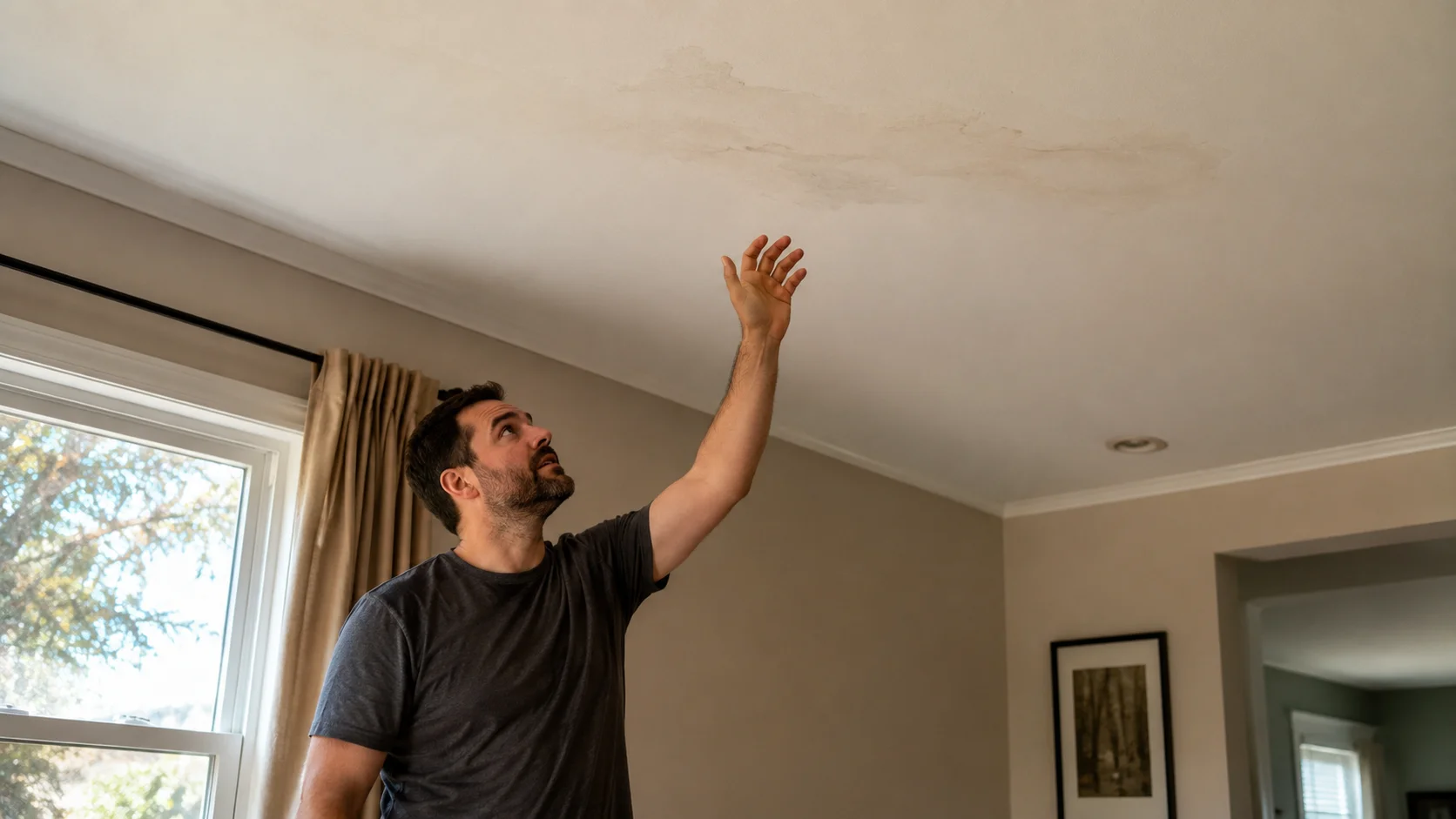
• Discoloration or water stains on walls, ceilings, or flooring, sometimes yellowish brown.
• Allergy like symptoms, such as sneezing, a runny nose, itchy eyes, or coughing, that improve when you leave the house and return when you come back.
The CDC guidance on mold cleanup notes that people with allergies, asthma, or weakened immune systems can be more sensitive to mold, and should avoid exposure during cleanup. If anyone in the home is experiencing these symptoms, the musty smell deserves prompt attention rather than a wait and see approach.
What to Do When You Notice a Musty Smell
Acting quickly is what keeps a small problem small. When you notice that musty smell after leak trouble in your home, the most important steps are to find and stop the moisture, dry the area fast, and bring in a professional if the problem is more than a small surface spot. The following actions protect both your home and your health.
First, find and fix the source of the water, whether it is a plumbing leak, a roof leak, or condensation. Mold cannot be solved while moisture is still arriving. Second, dry the area as quickly as possible, ideally within that 24 to 48 hour window. Fast, professional emergency water extraction and structural drying remove water and dry the structure far faster than household fans can, which is what actually prevents mold from taking hold.
If mold has already started, the safe approach is containment and proper removal, not spreading spores around with a fan. Professional mold containment barriers and engineering controls isolate the affected area, while HEPA air scrubbing and filtration captures airborne spores. When materials such as drywall or insulation are too far gone to save, mold affected material removal takes them out safely so the mold cannot keep spreading. If you would like help, you can use the Request a Quote button on our website and fill in the contact form for a faster response.
Areas We Serve Across Modesto and the Central Valley
RedTag Property Mitigation helps homeowners with water and mold situations across the region. Service areas include Downtown Modesto, Sylvan, Beyer Park, College Area, Lakewood, Village One, and the Airport District, along with Salida, Riverdale Park, Ceres, Turlock, Denair, Keyes, and Hughson. Coverage also reaches North Stockton, Lincoln Village, Tracy, Mountain House, Lathrop, and Manteca, as well as Merced, Atwater, Livingston, and Madera. Wherever you are in the Central Valley, a musty smell after leak trouble is worth checking sooner rather than later.
Frequently Asked Questions
Does a musty smell always mean mold?
A persistent musty smell after leak events is one of the most reliable signs of mold, because the odor is produced by gases that mold releases as it grows. It does not always mean a large problem, but it almost always means moisture and mold are present somewhere, often hidden inside walls, under flooring, or above ceilings. Because the smell frequently arrives before any visible growth, it is worth investigating promptly rather than ignoring or simply masking it.
How fast can mold grow after a leak at home?
Mold can begin growing on damp materials within 24 to 48 hours of water exposure, according to EPA guidance. Warm, humid conditions speed this up. This is why drying wet materials quickly is so important, ideally within that window, and why a leak that is left to dry on its own so often leads to a mold problem. The faster the area is dried and the moisture source fixed, the less likely mold is to take hold.
Can I just cover up the musty smell with air fresheners?
Masking the smell does not solve the problem and can let it grow worse. A musty smell after leak events is a symptom of active mold and moisture, so covering it only hides the warning sign while the underlying growth continues to spread and feed on damp materials. The right approach is to find and fix the moisture source, dry the area thoroughly, and remove any mold that has established. Treating the cause, not the smell, is what actually resolves the issue.
Is mold from a leak a health risk?
It can be. Mold produces allergens and irritants, and exposure can trigger sneezing, a runny nose, itchy eyes, coughing, and asthma symptoms. The CDC notes that people with allergies, asthma, or weakened immune systems are more sensitive and should avoid exposure during cleanup. If household members develop symptoms that improve when they leave the home and return when they come back, that pattern points toward mold and is a reason to address the musty smell promptly.
When should I call a professional instead of cleaning it myself?
Small surface spots on hard, non porous surfaces can sometimes be cleaned by here a homeowner, but larger areas, mold inside walls or HVAC systems, or any situation involving contaminated water call for a professional. If the musty smell is strong, spreading, or returning after cleaning, the source is likely hidden and needs proper containment and drying. A professional can find the moisture source, contain the area to prevent spread, and remove affected materials safely.
Conclusion
A musty smell after leak events is your home telling you that moisture and mold are present, often before you can see anything. Because mold can take hold within 24 to 48 hours, the smart response is to find and fix the water source, dry the area quickly, and bring in professional help when the problem is more than a small surface spot. Acting early protects both your home and your health, and keeps a minor leak from becoming a major mold project.
More Services
Explore related RedTag mitigation services below:
• Mold Affected Material Removal
• Mold Containment Barriers & Engineering Controls
• HEPA Air Scrubbing & Filtration
• Negative Air Pressure Systems
• Post-Remediation Clearance Preparation
• Emergency Water Extraction
• Structural Drying